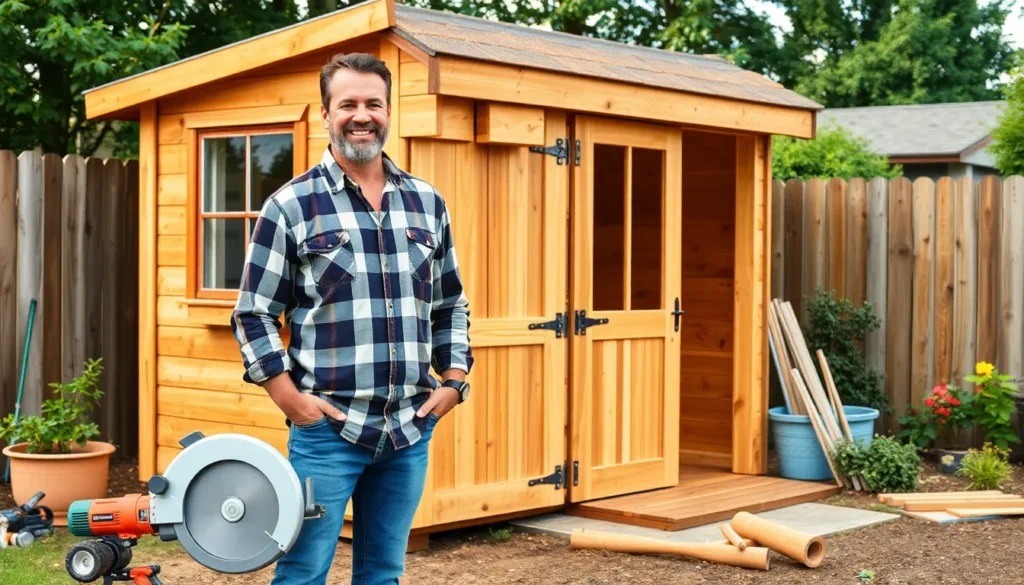
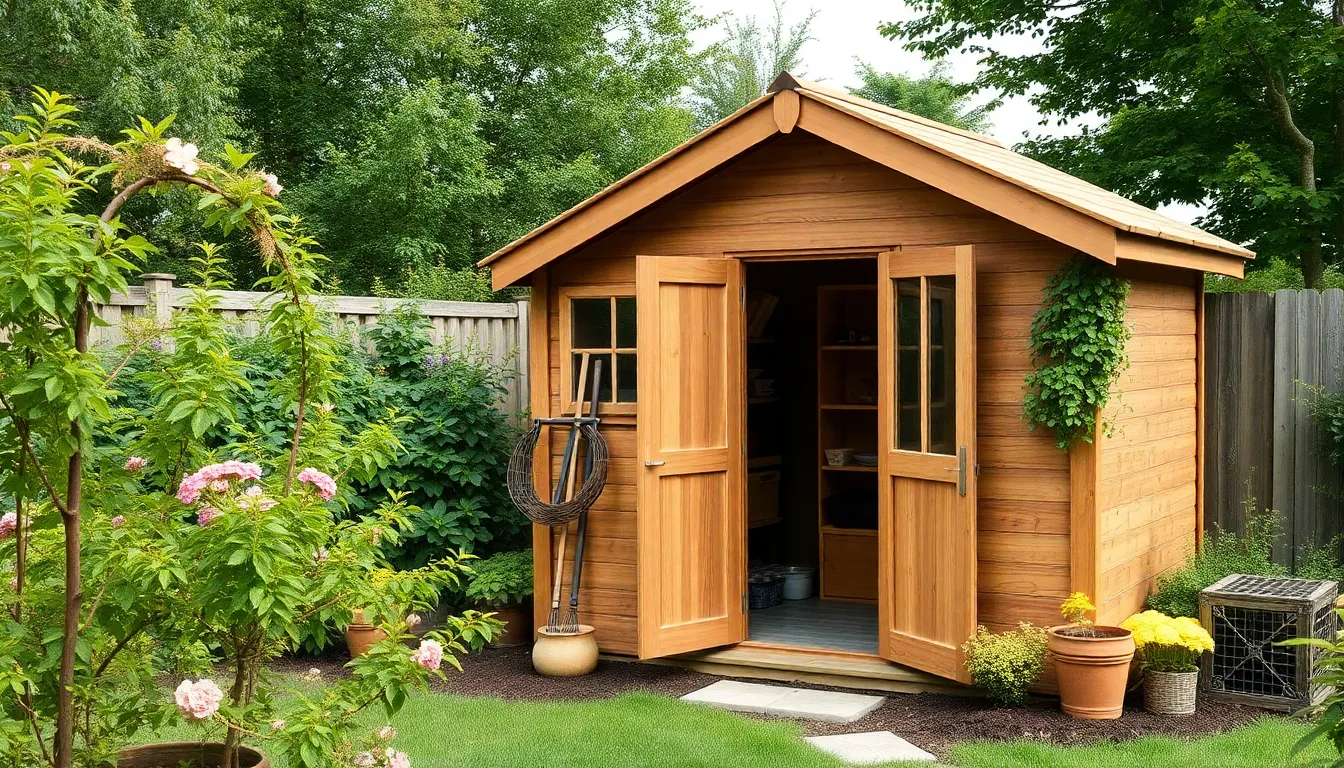
Building a DIY wood shed might just be the most rewarding project he’s ever tackled. Imagine transforming that cluttered corner of the yard into a stylish storage haven where tools and toys can finally breathe. Not only does a wood shed add charm to the landscape, but it also gives him the satisfaction of saying, “I built that!” to anyone who asks.
DIY Wood Sheds
DIY wood sheds provide an excellent opportunity for individuals to enhance their outdoor spaces. These structures serve multiple functions, such as storing gardening equipment, tools, and seasonal items. A well-built wood shed not only declutters yards but also adds aesthetic value to properties.
Construction of a wood shed requires careful planning. Choosing the right materials is essential, with options like cedar, pine, or plywood available for various budget ranges. Important tools include a saw, hammer, and level, which help ensure precise cuts and structural integrity.
Dimensions differ based on intended use. For example, a small shed may measure 6 feet by 8 feet, while larger versions can reach up to 12 feet by 16 feet. Deciding on size early in the planning process streamlines construction and meets specific storage needs.
Design aspects also play a critical role. Selecting features such as windows, doors, and roofing types impacts both functionality and visual appeal. Gable roofs provide better water runoff, while flat roofs can offer additional storage space for items like gardening pots.
Ventilation is another consideration; proper airflow prevents moisture buildup. Including vents or windows in the design helps keep stored items dry and in good condition.
Cost varies, with average expenses ranging from $300 to $2,000, depending on materials, size, and features. Budgeting effectively ensures that the project remains financially manageable while still achieving desired outcomes.
Building a wood shed fosters not just practicality but creativity as well. Completing a project enhances personal satisfaction, turning a DIY endeavor into a point of pride.
Benefits of Building Your Own Wood Shed
Building a DIY wood shed offers numerous benefits that enhance both the functionality and aesthetics of outdoor spaces.
Cost Savings
Cost savings represent a significant advantage of constructing a wood shed. DIY projects typically avoid labor costs associated with professional installations. Materials generally range from $300 to $2,000 depending on project size and wood type. Choosing budget-friendly options like plywood can further reduce expenses. Finding used materials or repurposing old wood may also contribute to cost reduction. Ultimately, building a shed can save funds while fulfilling personal storage needs.
Customization Options
Customization options abound when creating a wood shed. Individuals can select dimensions based on their unique requirements, with sizes ranging from small (6 feet by 8 feet) to large (12 feet by 16 feet). Design elements such as windows and doors can enhance functionality and appearance. Personal preferences allow for custom colors or finishes to match existing outdoor decor. Additional features like shelving or tool racks ensure practical organization within the shed. Flexibility in design empowers homeowners to tailor their wood sheds to specific needs and tastes.
Essential Tools and Materials
Building a DIY wood shed requires specific tools and appropriate materials. Preparation ensures a smoother construction experience and results in a sturdy shed.
Tools You Will Need
Gather essential tools for the project. A circular saw provides precise cuts on wood. A hammer drives nails effectively. A measuring tape allows for accurate measurements. Clamps help secure boards during assembly. Additionally, a level ensures the structure remains even. A drill can facilitate fastener installation. Relying on a square helps maintain right angles. These tools streamline the building process and enhance the final outcome.
Recommended Wood Types
Selecting the right wood type is crucial for durability. Cedar offers natural resistance to decay. Pine presents an economical option with ease in handling. Plywood provides versatility and strength, suitable for various shed components. Redwood features beauty and robustness. Choose treated lumber for added longevity, especially for flooring. Each wood type serves specific needs and contributes to the overall integrity of the shed.
Step-By-Step Guide to Building a DIY Wood Shed
Building a DIY wood shed requires careful planning and execution. The following sections outline key steps for turning a vision into reality.
Planning and Designing the Shed
Determining the shed’s purpose sets the foundation for design specifications. Consider factors like size, layout, and storage needs. Choose a style that complements the property, whether traditional or contemporary. Incorporate functional features such as windows for natural light and shelves for organized storage. Creating a detailed blueprint helps visualize the project, enabling more informed decisions on dimensions and materials.
Foundation and Framing
Selecting a solid foundation type is crucial for stability and longevity. Concrete blocks, a gravel base, or a treated wood frame can provide adequate support. Begin framing with pressure-treated lumber, ensuring it aligns with the blueprint. Construct walls using predetermined dimensions, ensuring vertical sections are level and secure. Reinforcing corners with diagonal bracing enhances structural integrity. Careful attention during this phase contributes to a sturdy foundation for the shed.
Roofing and Finishing Touches
Choosing the correct roofing material affects both durability and aesthetics. Asphalt shingles, metal roofing, or wooden shingles can offer protection against the elements. Installing a proper slope directs water away, preventing pooling. Adding finishing touches completes the shed’s visual appeal. Consider painting or staining wood for protection and style. Installing hardware like hinges and locks enhances functionality and security. These final details ensure the shed meets practical needs while enhancing outdoor appeal.
Maintenance Tips for Your DIY Wood Shed
Regular maintenance extends the life of a DIY wood shed and enhances its appearance. Start by inspecting the shed annually for any signs of wear or damage, such as cracks in the wood or loose roofing shingles. Address these issues immediately to prevent further deterioration.
Cleaning plays a crucial role in maintenance. Use a pressure washer to clean the exterior surfaces once a year, removing dirt, mold, and mildew. Pay attention to corners and crevices, where dirt tends to accumulate. Additionally, consider applying a wood cleaner that is specifically formulated for outdoor use.
Sealing the wood protects it from moisture. Every few years, apply a high-quality sealant or stain to the wood surfaces. This process prevents water penetration and minimizes the risk of rot. Choose products suited for the specific type of wood used; for instance, cedar often benefits from a clear water-repellent preservative.
Ventilation is essential to avoid moisture buildup inside the shed. Ensure vents are unobstructed and operational to promote airflow. This practice reduces humidity and discourages mold growth.
Check the shed’s foundation and flooring for stability. Look for signs of settling, and make necessary adjustments to avoid structural issues. Repair any damaged boards or panels promptly to maintain structural integrity.
Evaluate the door and window seals as well. Gaps can lead to unwanted pests. Replace worn weather stripping or caulking to keep critters out.
Lastly, maintain the interior organization. Regularly clean and declutter to maximize storage capability and ease of access. This habit not only keeps tools and equipment sorted but also helps in identifying items needing replacement or repair.
Conclusion
Building a DIY wood shed is more than just a practical solution for storage; it’s an opportunity for creativity and personal expression. With careful planning and the right materials anyone can transform their outdoor space while gaining a sense of accomplishment. The customization options available allow for a unique design that fits individual needs and enhances the overall landscape.
Regular maintenance ensures the shed remains functional and visually appealing for years to come. By investing time and effort into this project individuals not only create a useful structure but also elevate their outdoor environment. Embracing the DIY approach to building a wood shed can lead to lasting satisfaction and a space that truly reflects personal style.